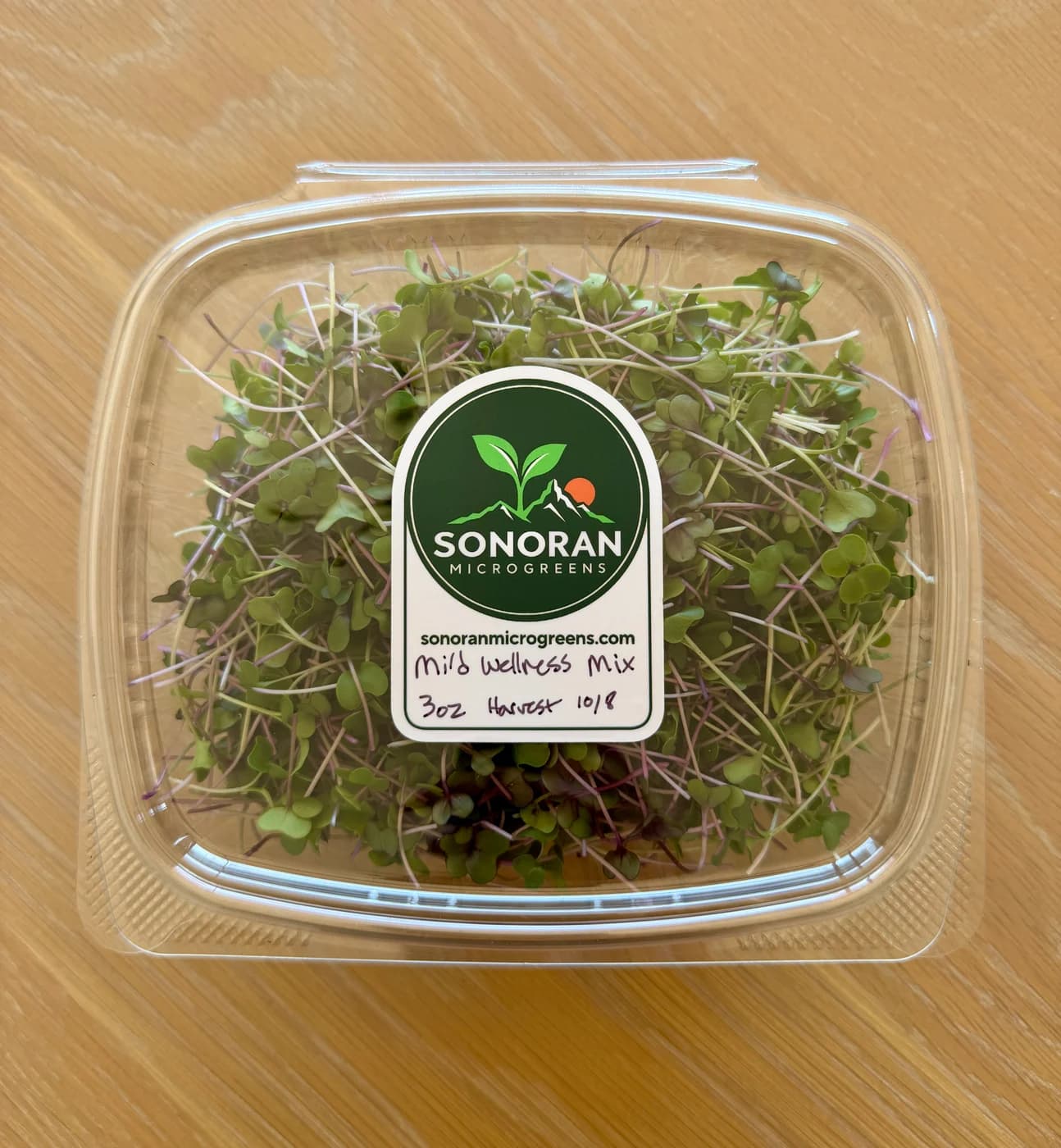
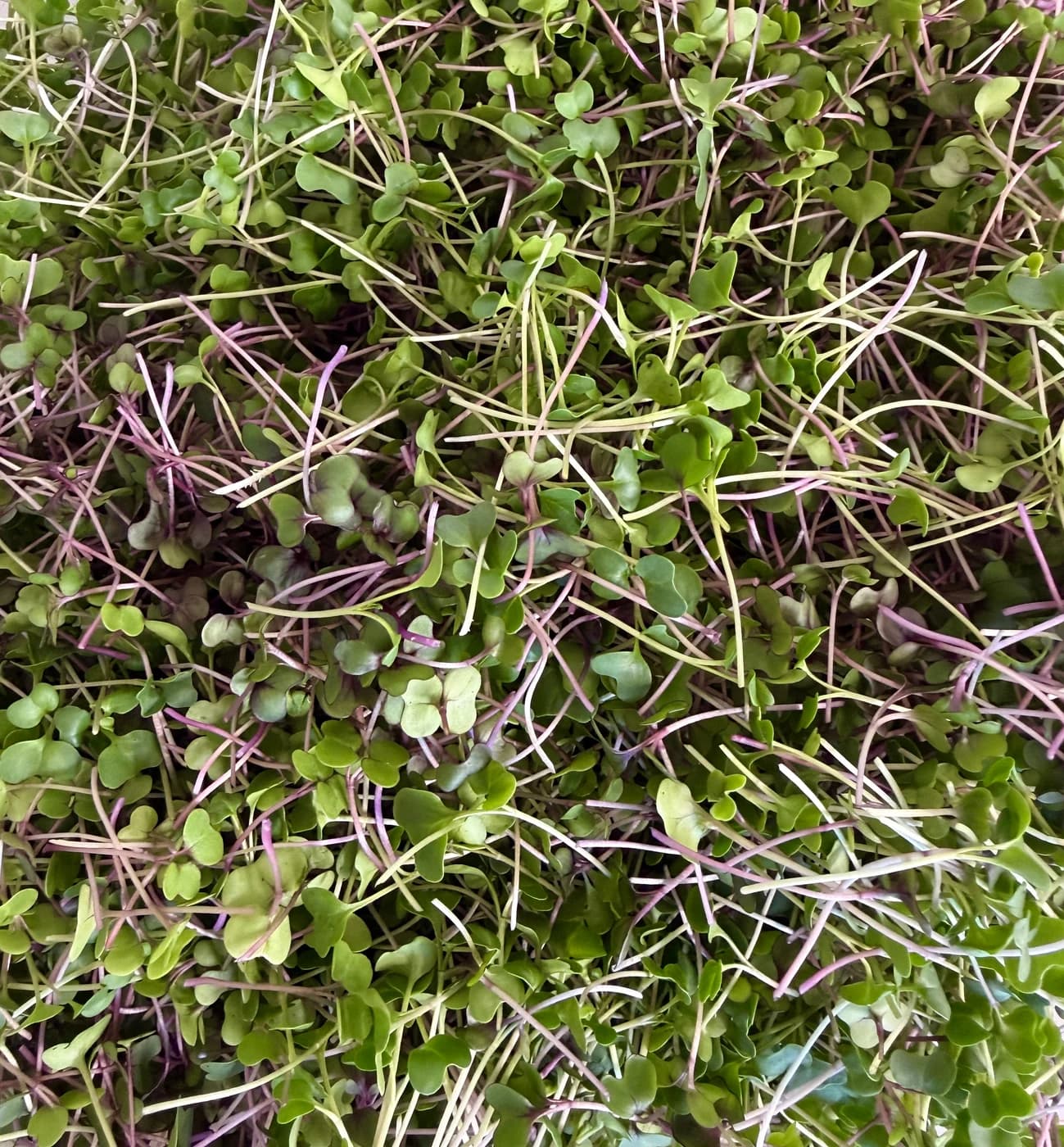
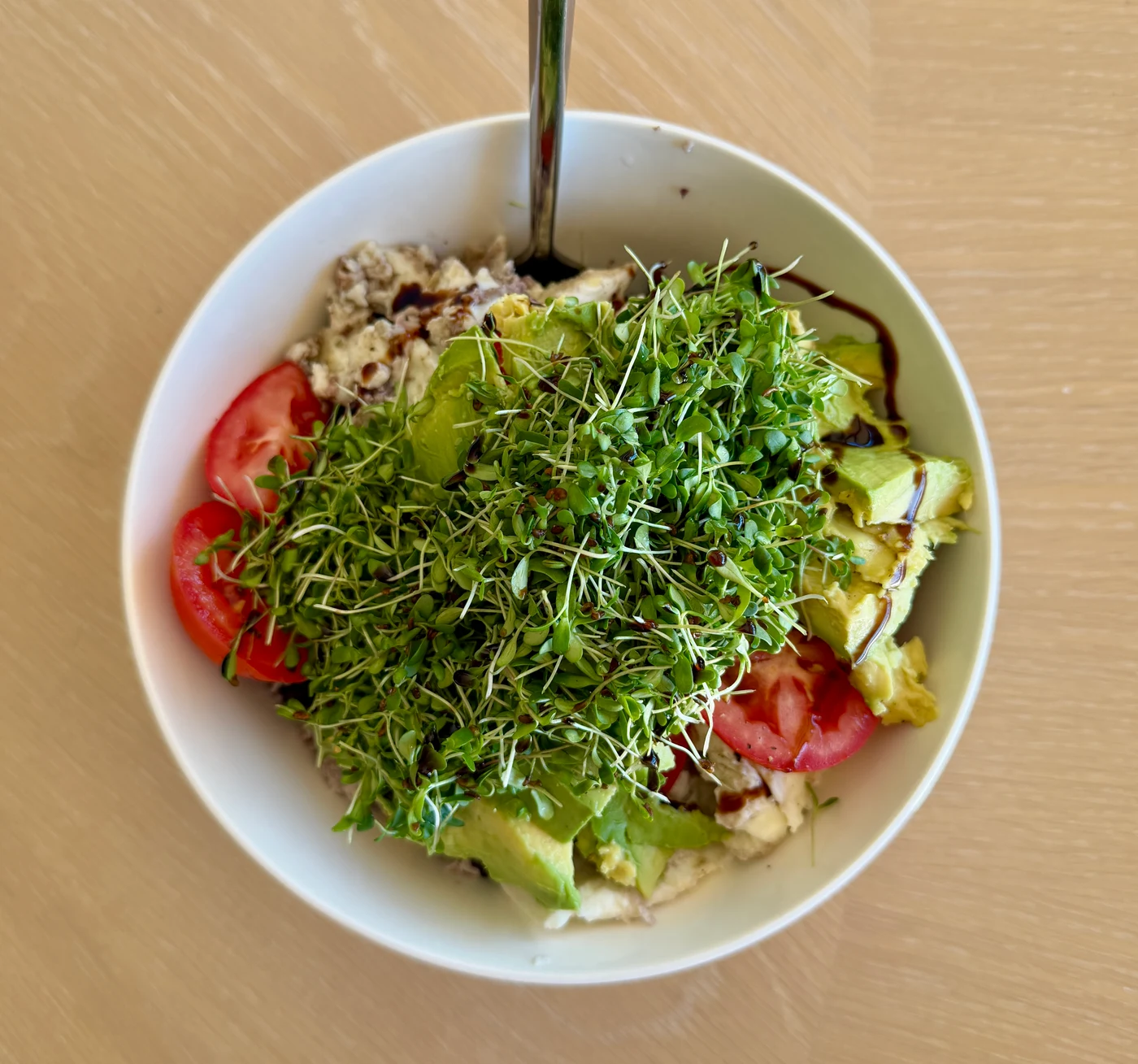
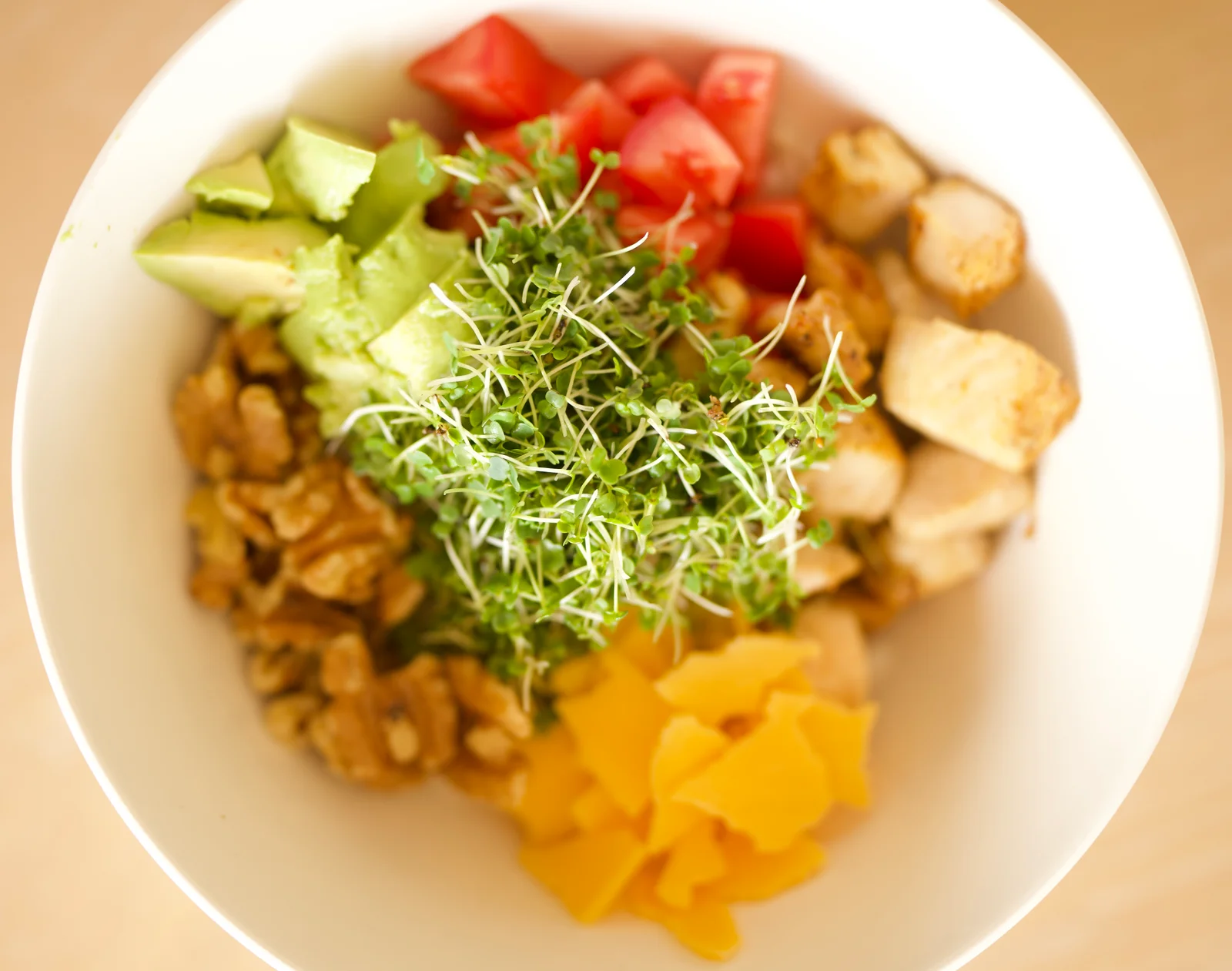
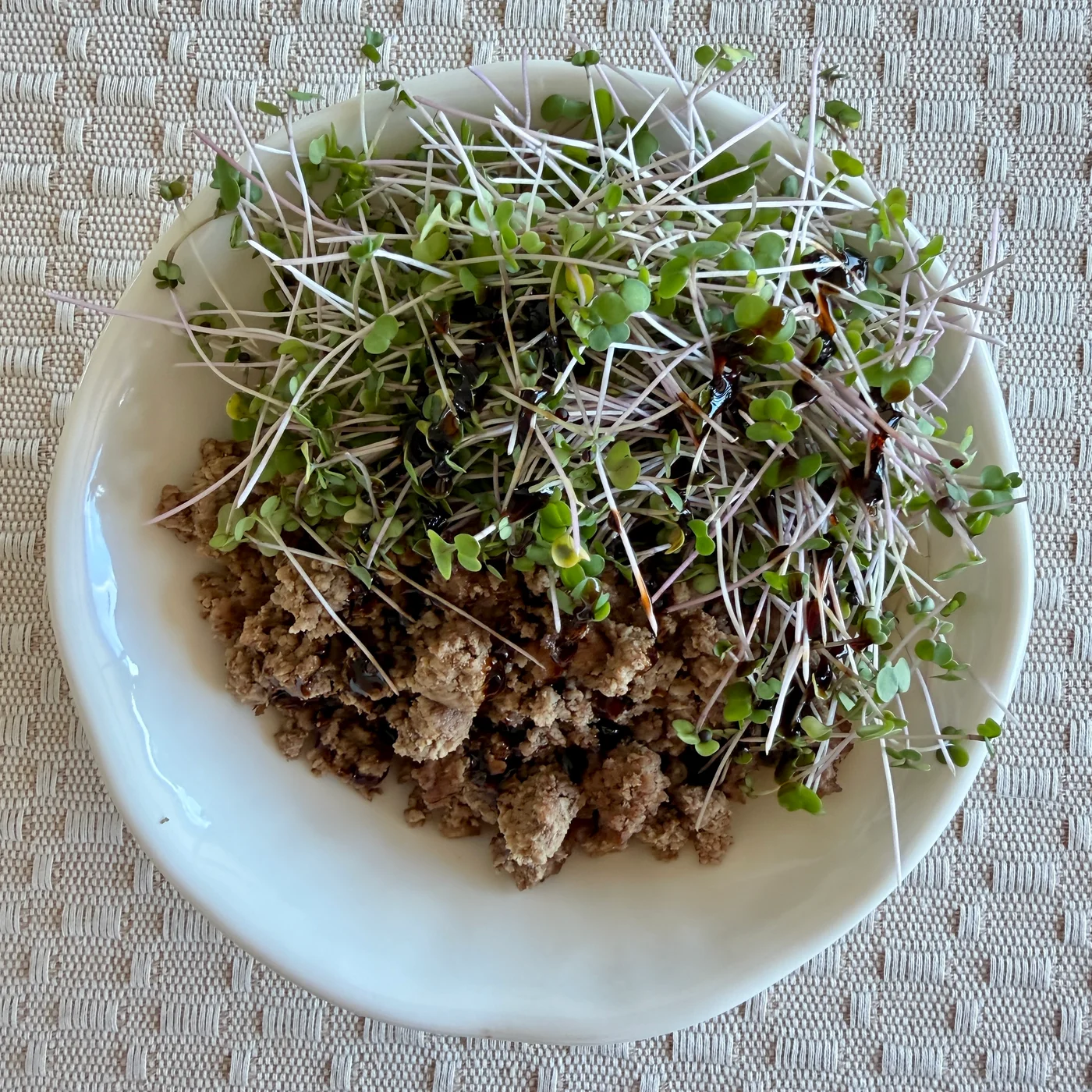
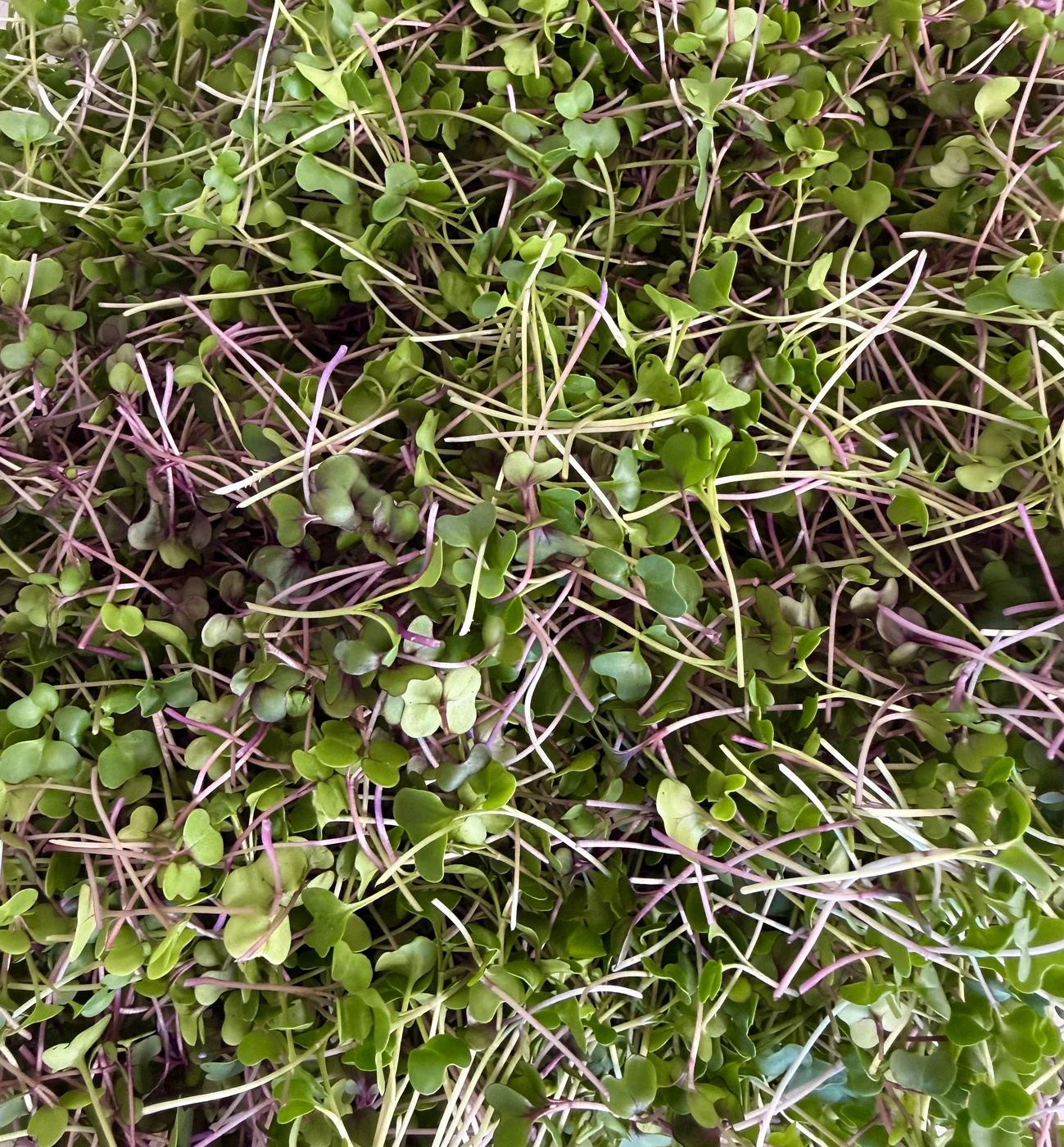
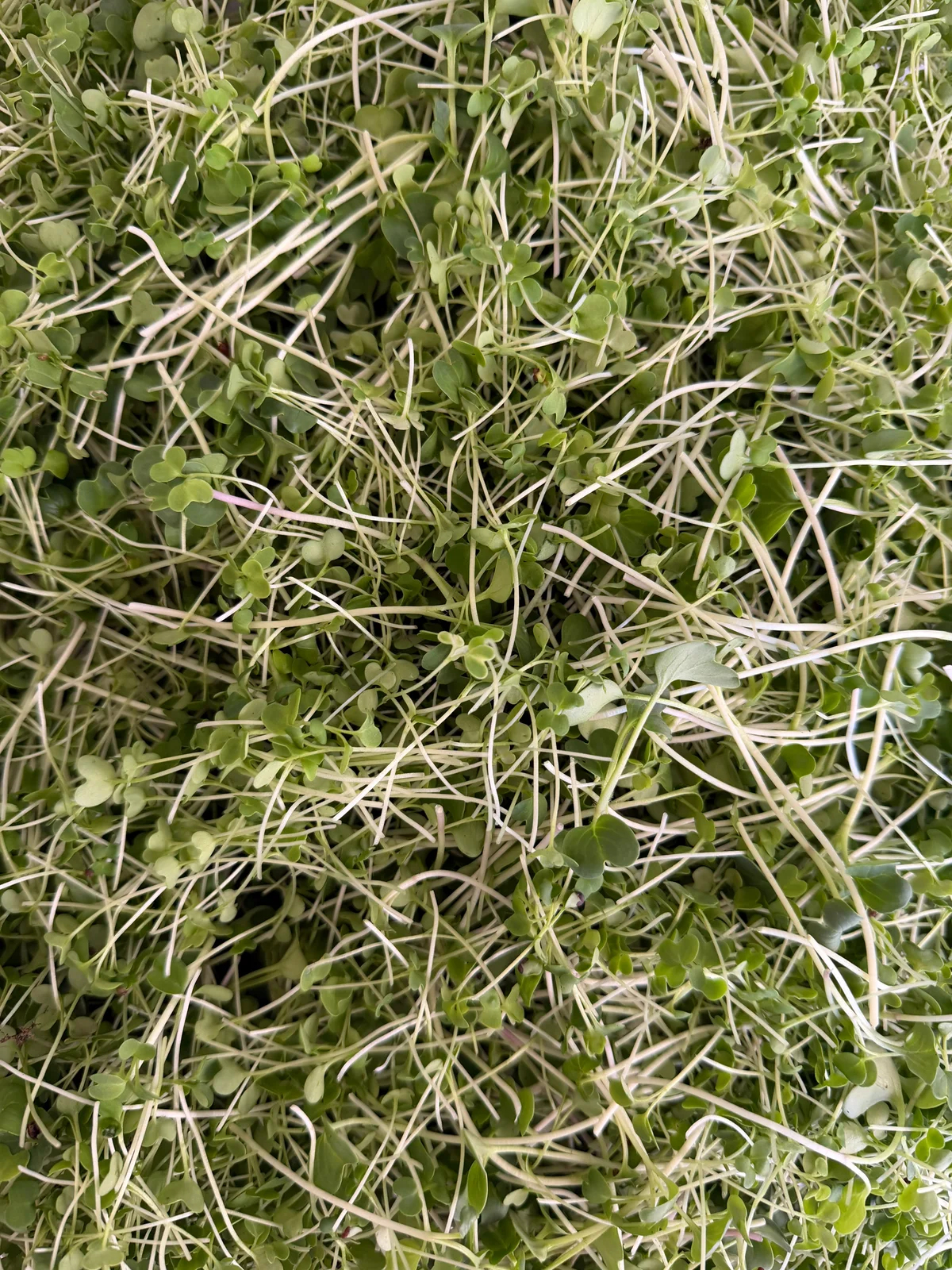
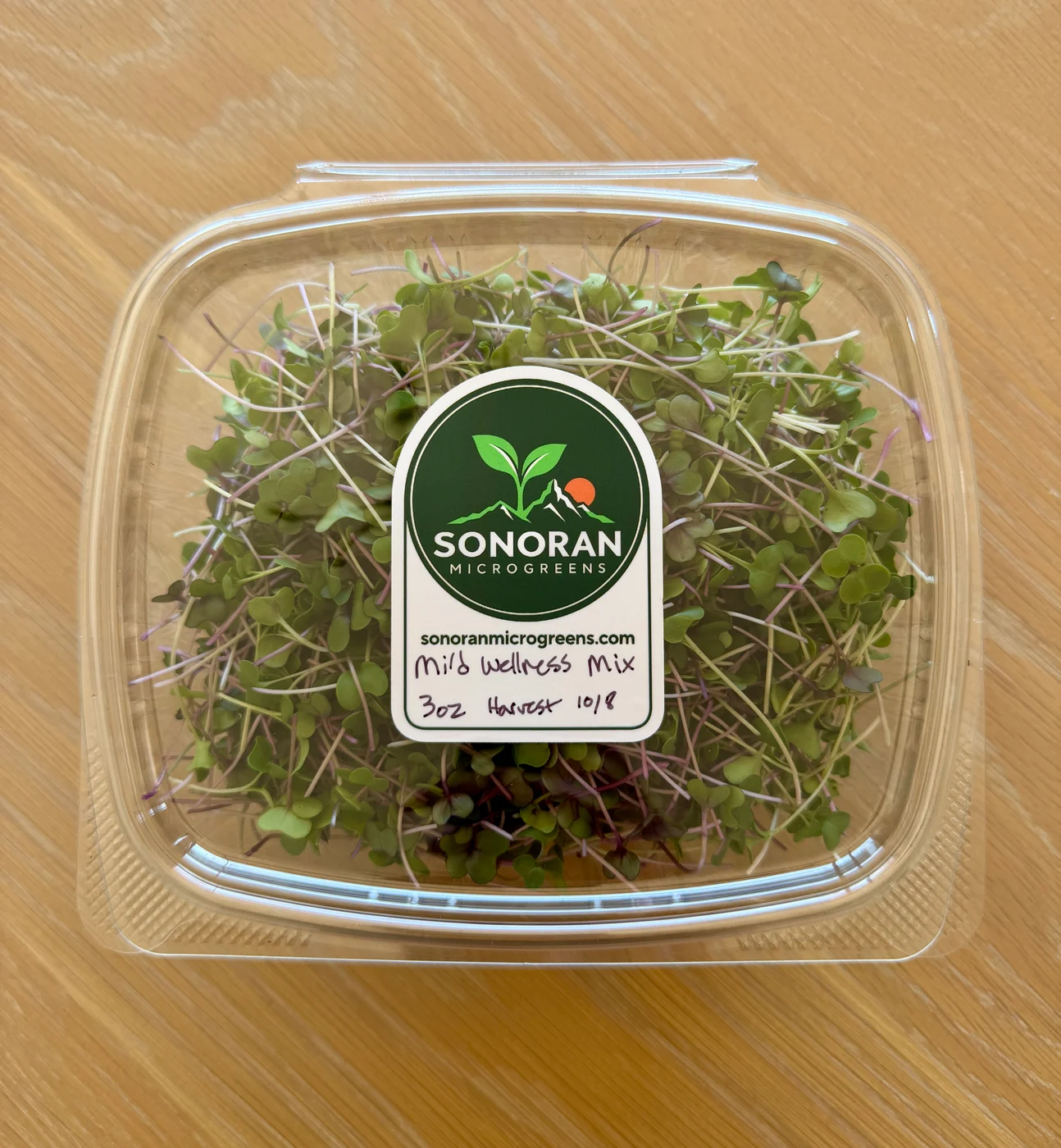
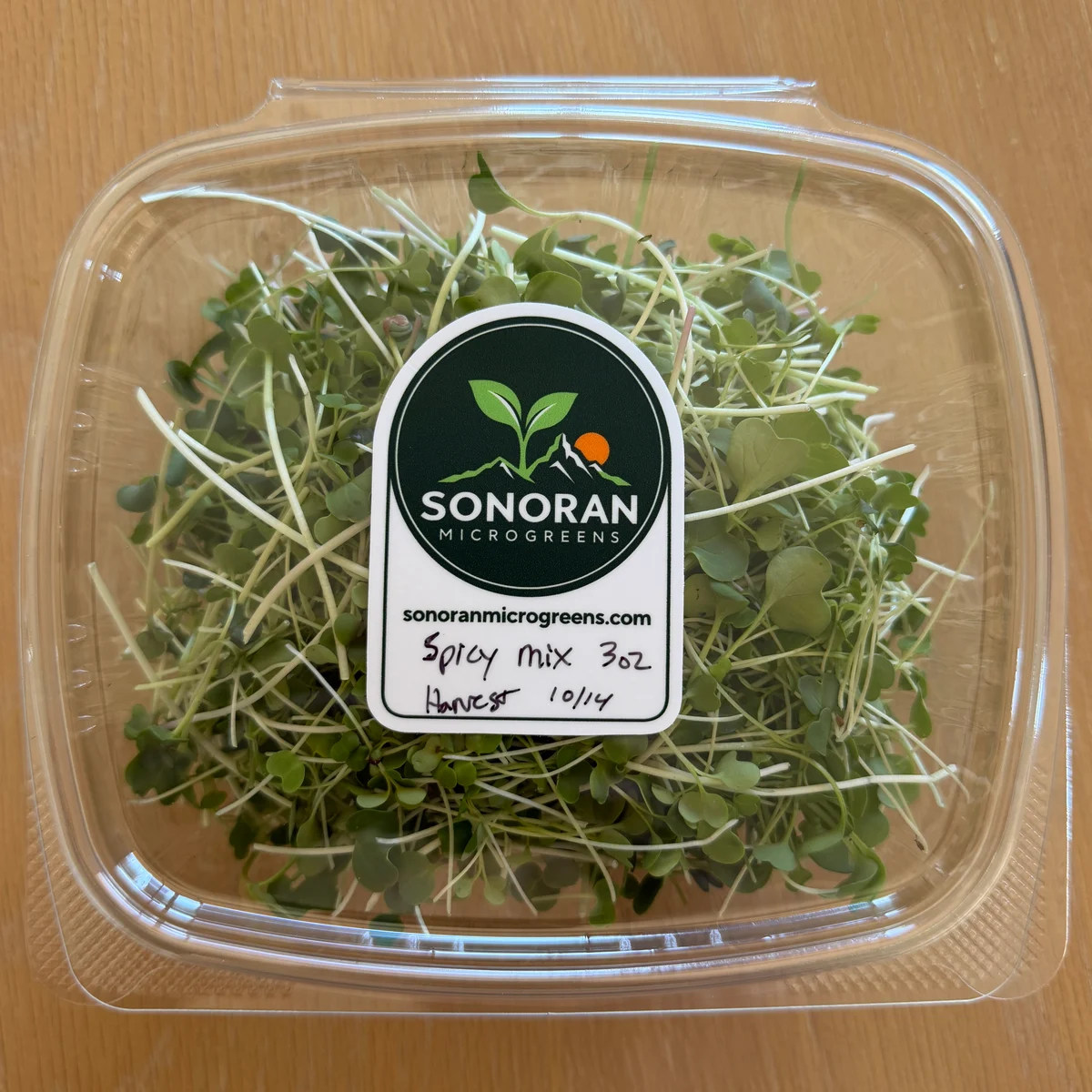
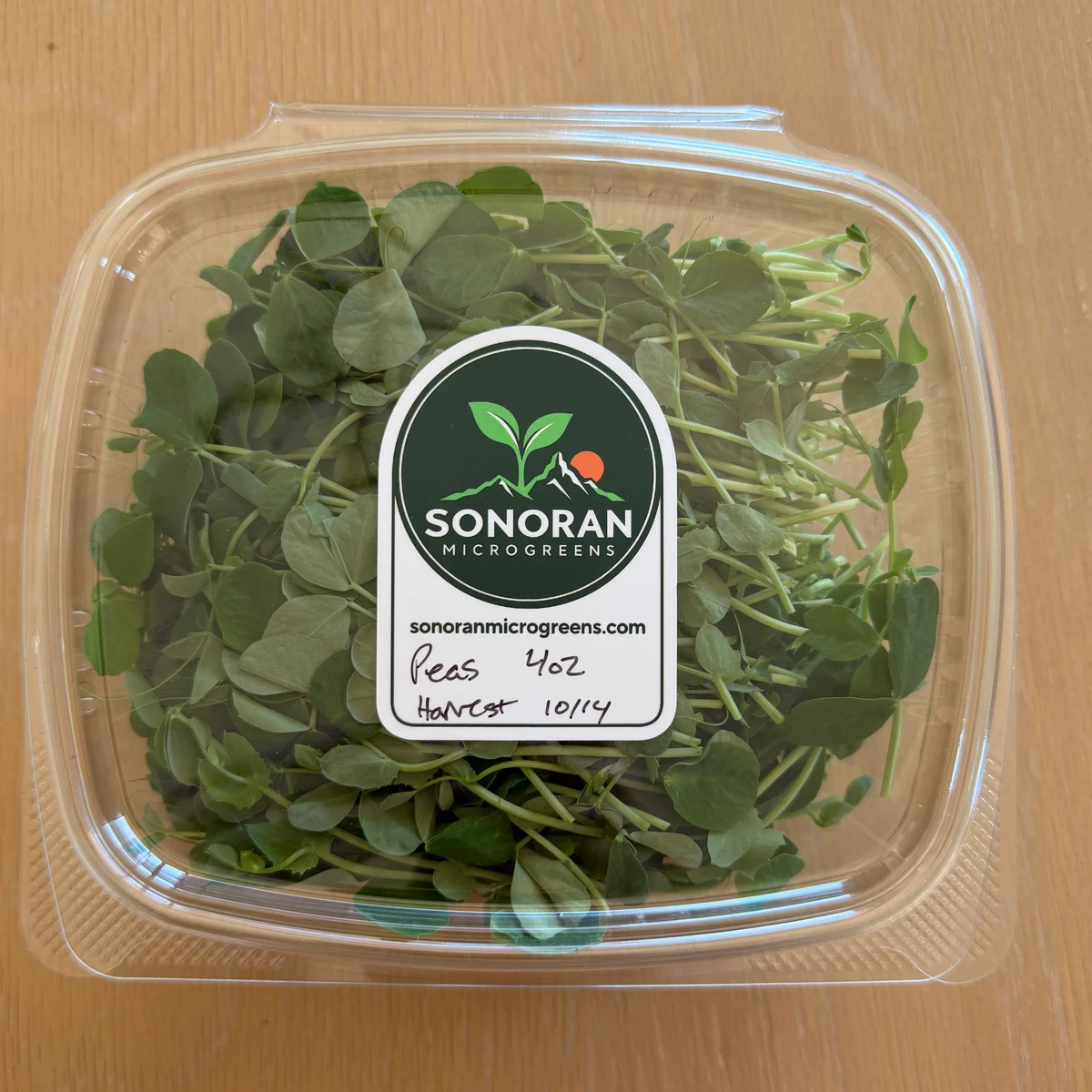
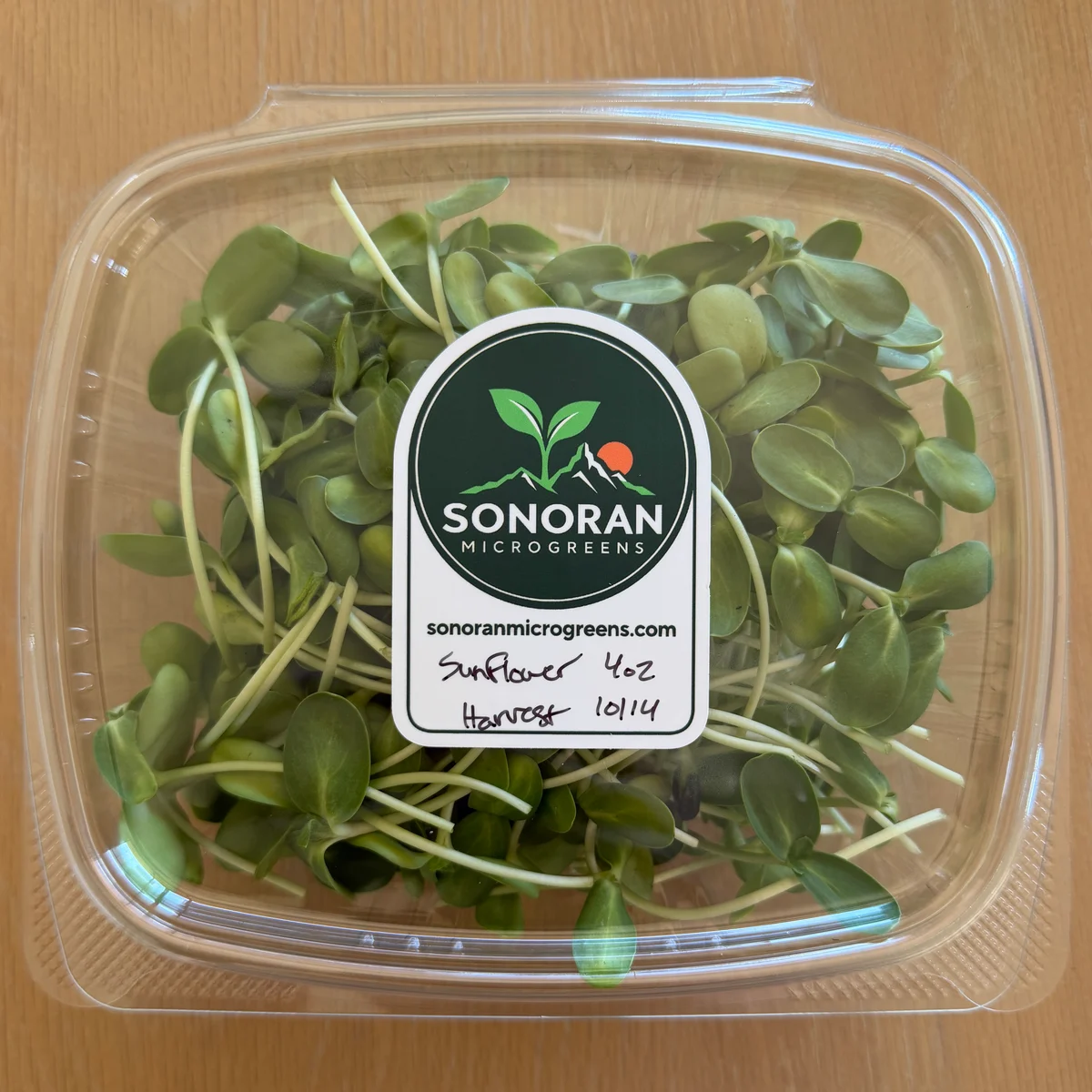
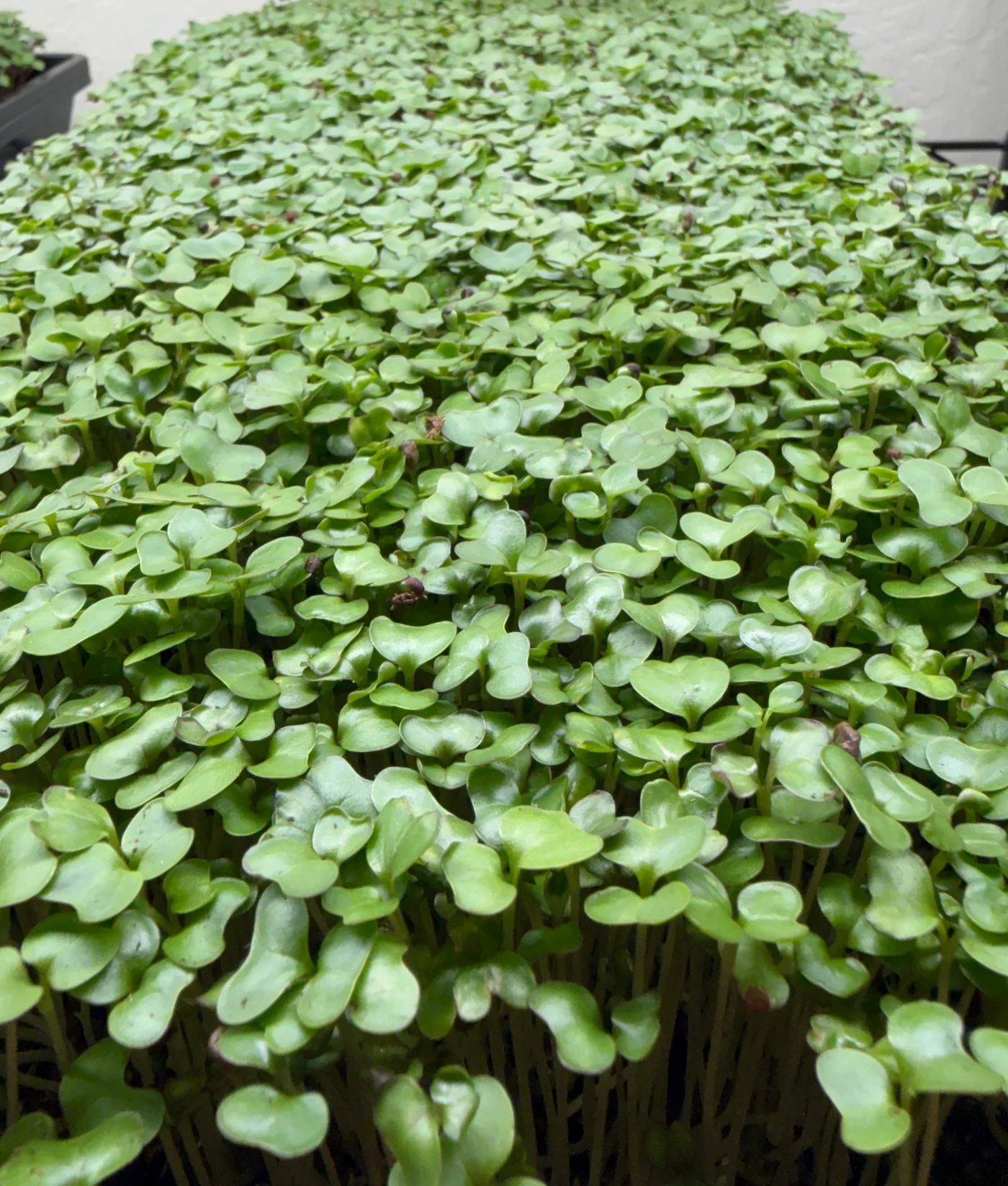
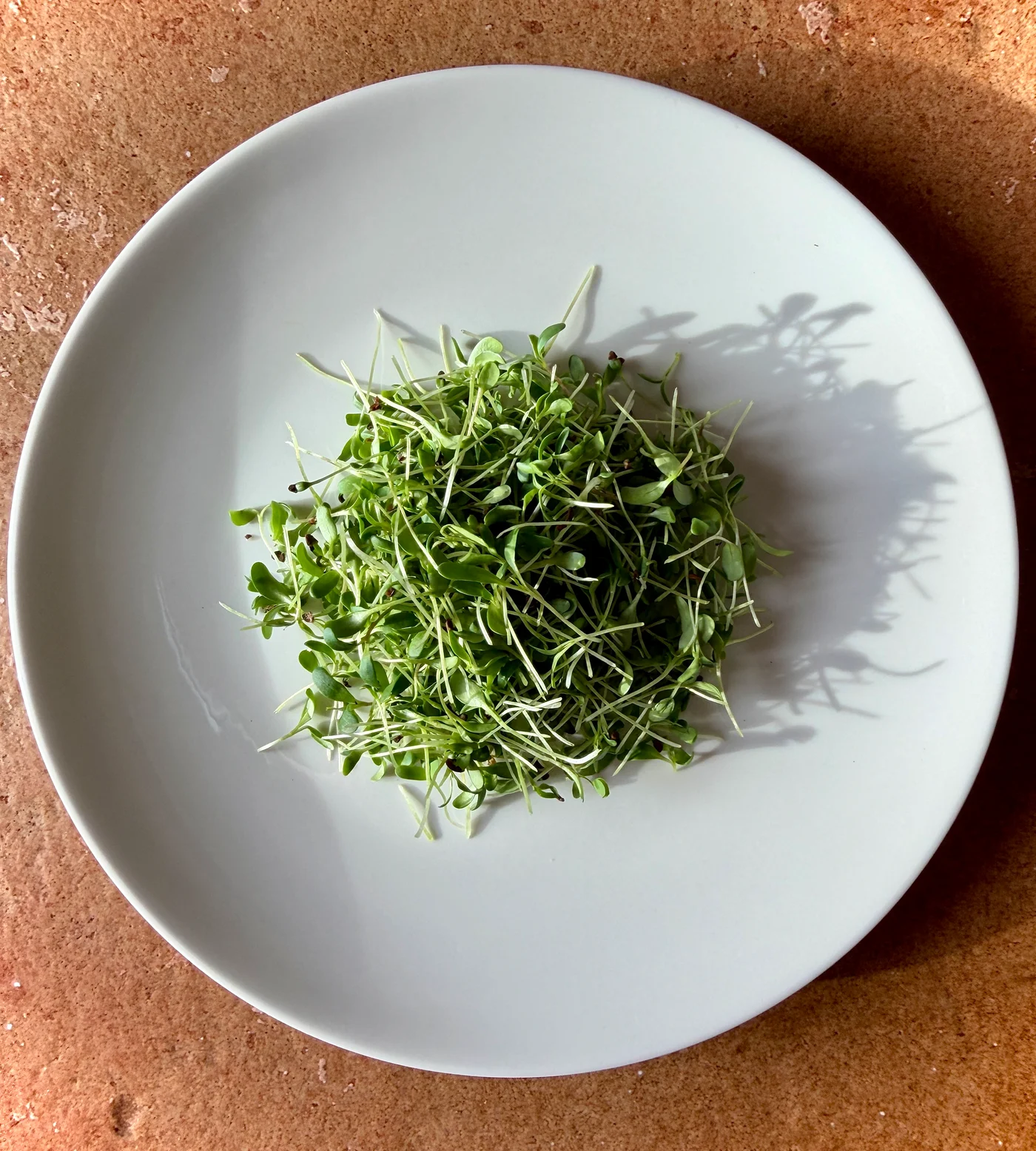
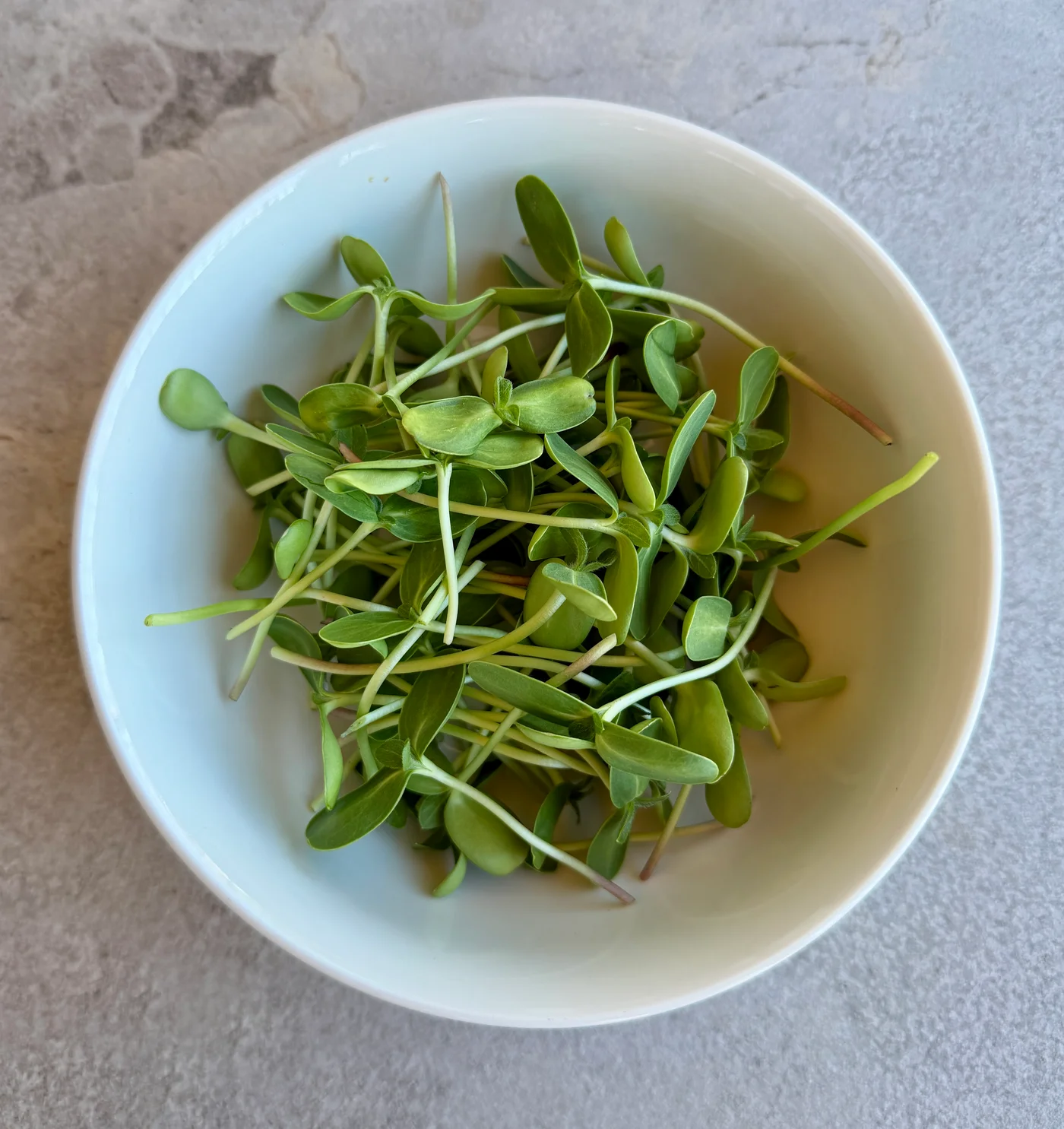
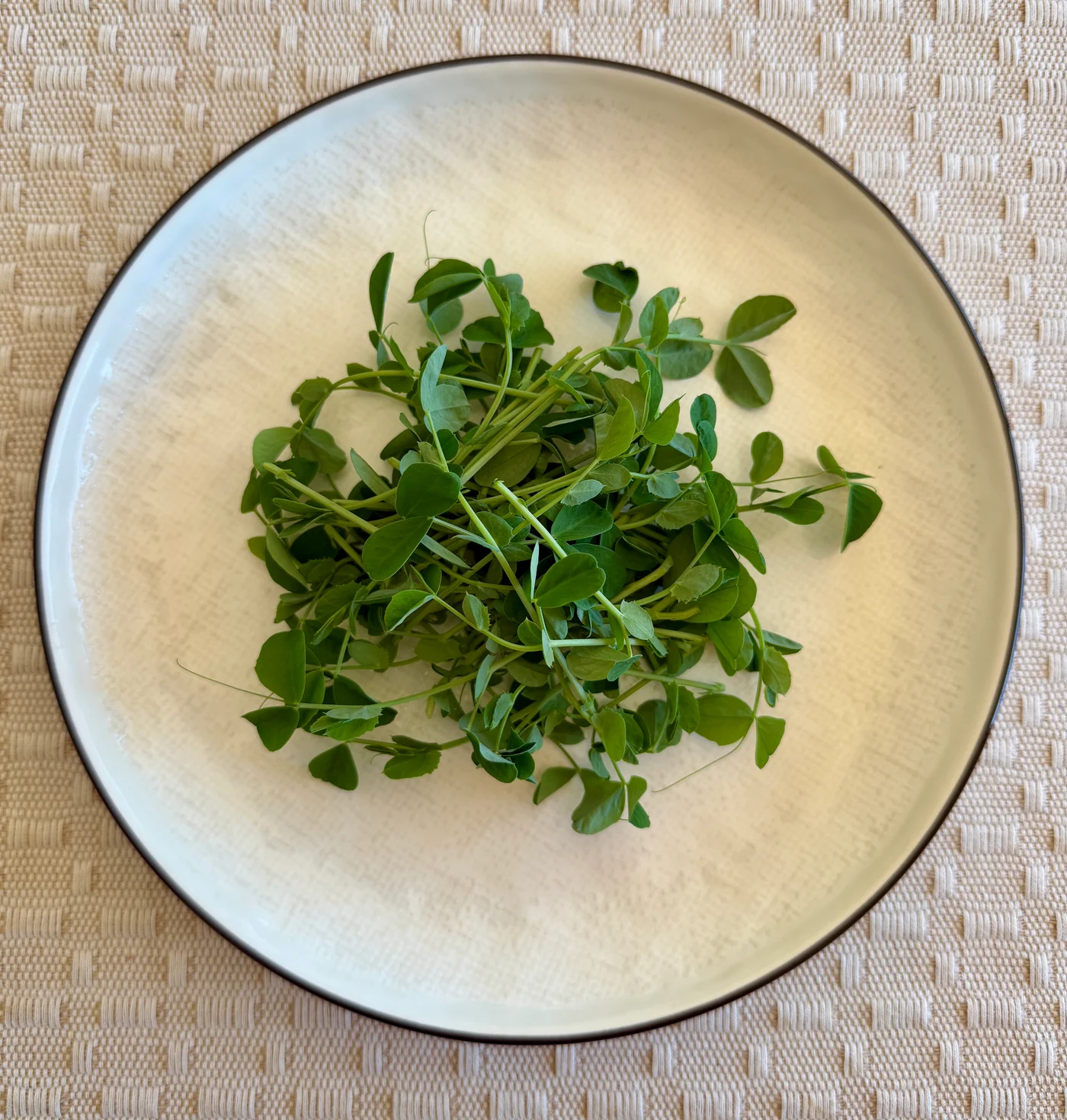
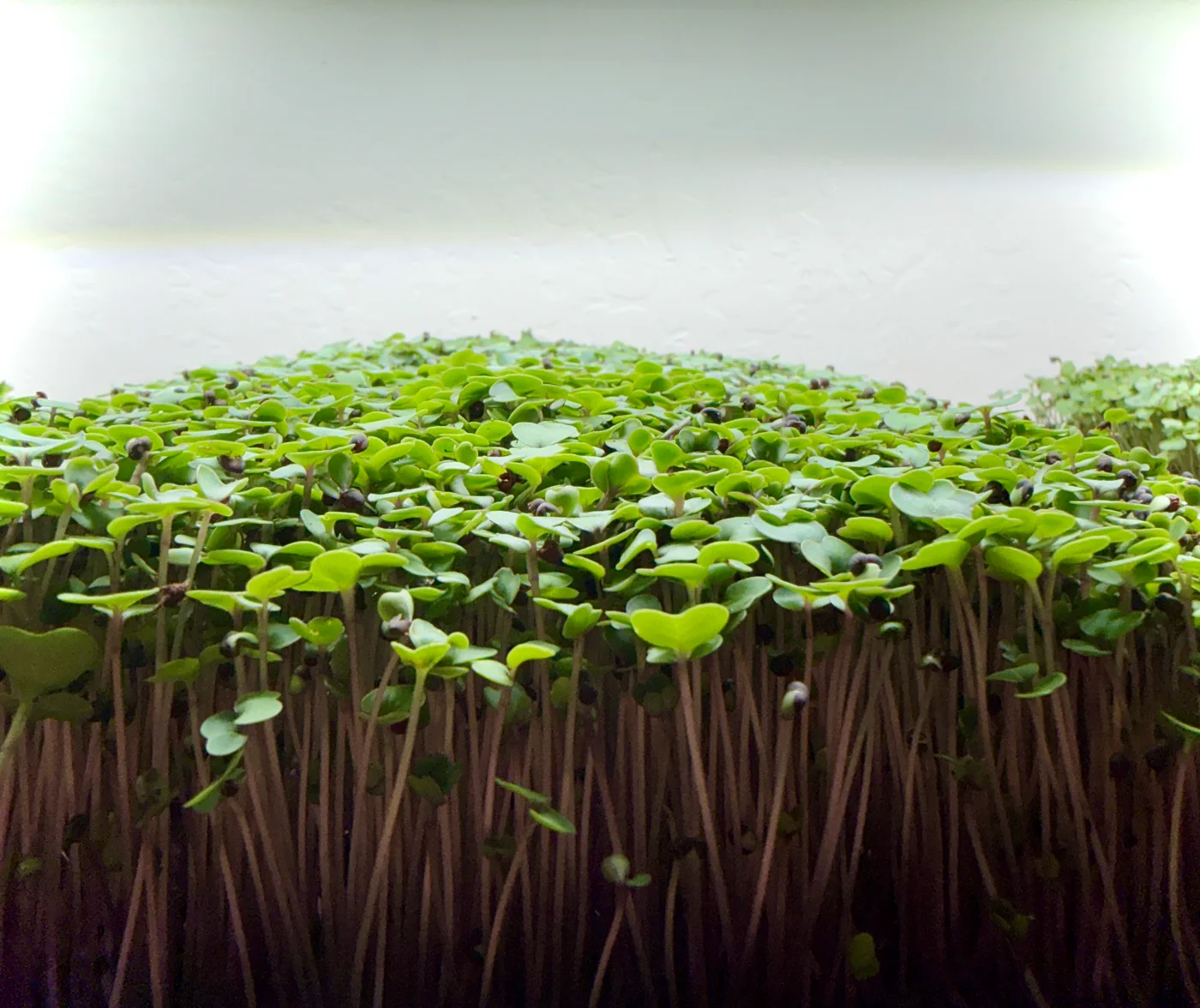
Grown in North Scottsdale, microgreens are one of the healthiest additions to your plate. From mild, tender mixes to sweet, crunchy shoots, add a fresh handful of vibrant color, delicious flavor, and nutrition to the meals you already love.
Small greens with big flavor and remarkable nutrition
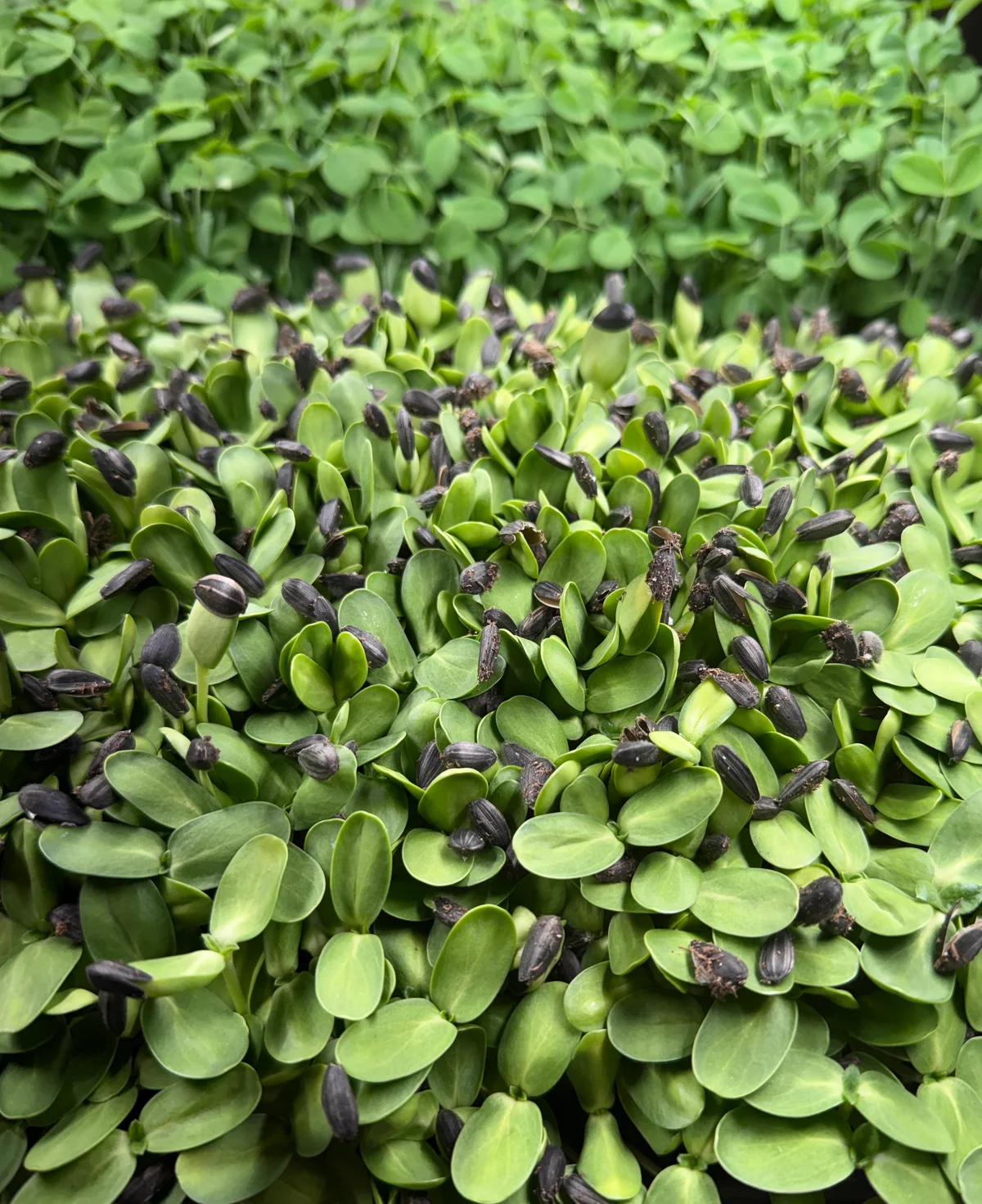
One of the healthiest things you can eat, microgreens are the tender first leaves of vegetables like broccoli, kale, and radish. Harvested young, they bring vitamins, beneficial plant compounds, and fresh crunch to every handful, with flavors ranging from sweet and mellow to boldly peppery.
A simple way to bring more nutrition to your plate and make healthy eating something you look forward to.
WHEN DID YOU LAST EAT SOMETHING JUST HARVESTED?
Fresh nutrition, made easy. Bring vibrant color, fresh crunch, and a little kick to the meals you already love.
These little leaves have a lot to offer: vitamins and phytochemicals, including carotenoids, in a fresh, flavorful handful. Phytochemicals are beneficial compounds that plants naturally produce. Grown indoors and harvested young, they’re small and tender. No chopping, cooking, or extra pans to clean. Just add a handful to the meals you already make.
Up to 40 times the nutrient concentration by weight
A University of Maryland and USDA study of 25 varieties found up to 40 times the concentration of certain vitamins and carotenoids compared with the same fresh weight of mature vegetables. The study measured vitamins C, E, and K, along with beta-carotene and other carotenoids.
I’m Ross, an engineer by training, an entrepreneur by practice, and a grower at heart. I’ve always loved the outdoors and fresh food, and health and wellness have been a big part of my life. I got interested in microgreens because of how much nutrition they pack into those little leaves, and I kept growing because I loved sharing them with family and friends.
I started growing in 2019 and got serious about it over the last couple of years. Since then, I’ve been feeding my family and friends and enjoying the chance to share what I grow. Now I want to bring that same excitement to our community with local, nutrient-dense food that’s fresh, tastes great, and looks beautiful on the plate.
Learn more about microgreen nutrition.Read moreRead less
MORE THAN MEETS THE EYE.
Alongside vitamins, microgreens contain phytochemicals, compounds that plants naturally make. Here are three worth knowing.
BROCCOLI
Sulforaphane
Broccoli contains glucoraphanin, which can turn into sulforaphane when chopped or chewed.
Why it’s studied: Sulforaphane activates cellular antioxidant defenses and has shown anti-cancer activity in cell and animal studies. Cancer-prevention benefits in people are not yet established.
Red cabbage’s red-purple pigments are part of the polyphenol family.
Why they’re studied: Known for antioxidant activity: neutralizing cell-damaging free radicals in laboratory studies. Researchers are exploring how these properties translate to human health.
Arugula microgreens contain beta-carotene and lutein/zeaxanthin.
Why they matter: Beta-carotene provides the building blocks for vitamin A, essential for normal vision and immune function. Lutein and zeaxanthin help filter light in the retina.
Crop and compound research, not a promise of health effects from our greens. Levels vary by variety and growing conditions; our finished mix has not been lab-tested.